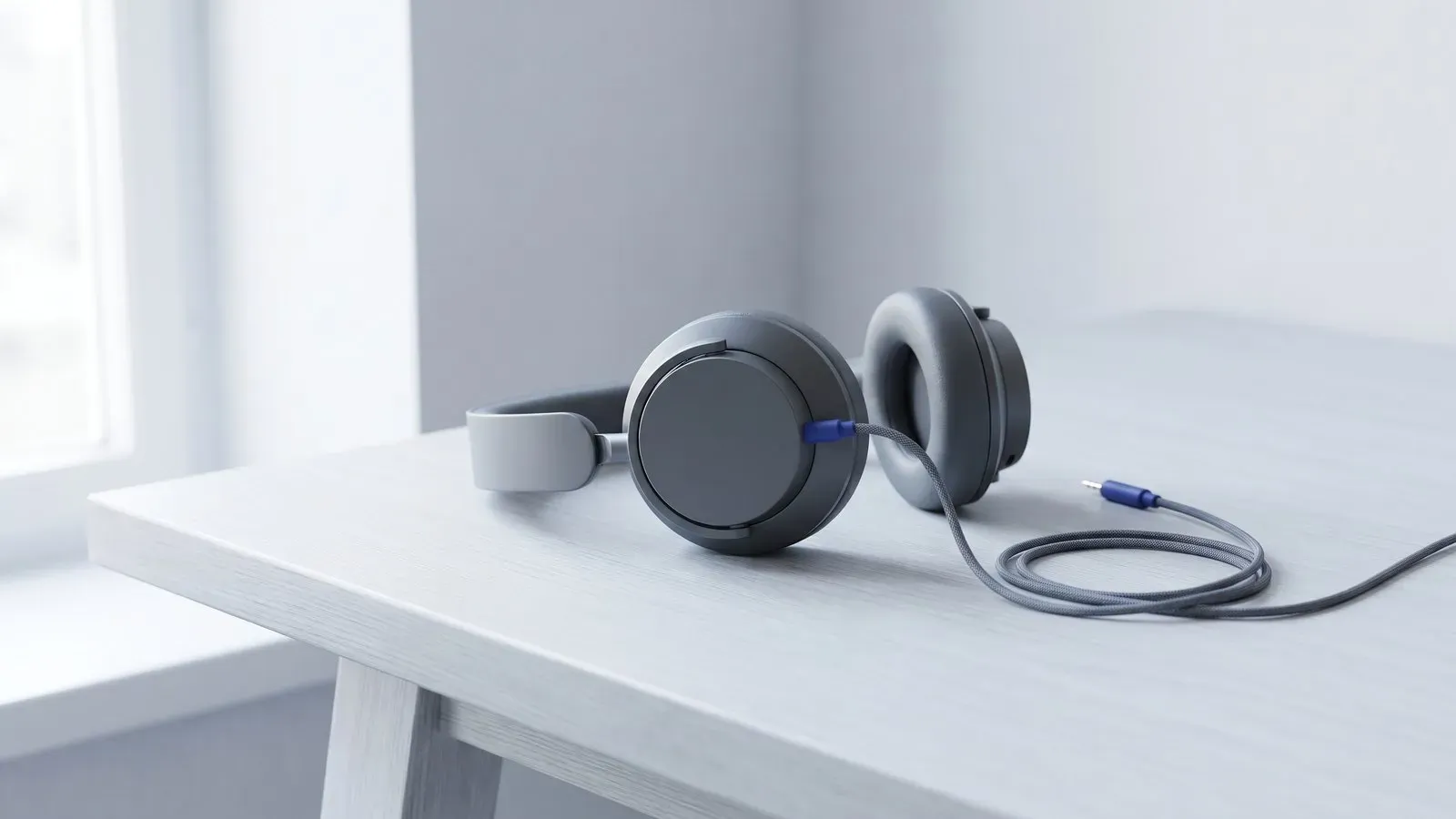
The short answer: noise cancelling listens to the world with small microphones and plays back the opposite sound. Where the two waves meet, they largely cancel.
Microphones do the listening
Cancelling headphones and earbuds carry microphones on the outside, and often one or two more inside the cup or ear tip. The outer mics sample the noise around you. The inner mics check what still got through, so the system can correct the error.
That sampling happens thousands of times a second. A plane engine makes a steady low hum, which is easy to predict, so the electronics can build a matching wave. A dropped fork is sudden and covers many frequencies at once, which is much harder to follow.
The inverted wave
Sound is a pressure wave. If a peak in the noise meets a trough of the same size at the same moment, the two add up to almost nothing. The headphones create that trough electronically and send it to the speaker alongside your music. This is why cancelling works best on low, steady sound: the wave is regular enough to mirror.
It is also why voices and crockery still arrive. Speech changes quickly and spreads across a wide range of frequencies, so the mirror is never quite exact. Nothing about the process is magic, and no pair of headphones removes everything.
What the decibel figures mean
Makers quote reduction in decibels, often between 20dB and 40dB, but the figure is measured at chosen frequencies. A large number at 100Hz says little about a crying child at 2kHz. Treat the number as a rough guide and trust your ears in the room where you will use them.
Battery life falls when cancelling is on. The Aurel Q9 runs for up to 40 hours with it off and 30 with it on, which is a typical gap. The extra microphones and processing draw power, and so does the transparency mode on most models.
Fit does half the work
A poor seal lets noise past before the electronics can act. Earbuds need the right tip size; over-ear cups need to sit flat around the ear without pressing hard. Glasses arms, thick hair and hats can break the seal and undo the effect.
Try the fit, then switch the mode off and on in the same room. The difference should be obvious. If it is not, the seal is wrong or the model is weak. Weight matters too: 250g is comfortable for a long flight, while 350g starts to press after two hours. Over-ear cups block more sound before the electronics begin, while earbuds are lighter and easier to carry but depend more on a good tip seal.
When to switch it off
On a quiet street, full cancelling can feel odd and slightly pressurised. Use transparency mode when you cross a road, and take one earbud out at a station. On a plane or a train, cancelling at a modest volume is kinder to your ears than raising the music to cover the engine.
Wind is the weak point outdoors. It hits the outer microphones and sounds like noise, so many sets reduce cancelling in a gust or use a foam guard. That is normal, not a fault, and it is one reason a walk with headphones sounds different from a flight.
- Try the fit with the tips or pads you will use.
- Test voices and traffic, not only engine noise.
- Compare battery life with cancelling switched on.
- Check the weight for a long journey.
- Find the transparency control before you travel.
Good cancelling makes a noisy journey calmer. It does not replace a decent seal or a sensible volume.