The short answer: a good phone covers most everyday photos, but a camera still wins when light is poor, the subject moves fast or you want a long zoom. Buy one for a reason, not for habit.
The sensor is the difference
A phone sensor is small, often around 10mm to 13mm across. A camera with a 1in sensor is roughly twice that, and an interchangeable-lens model can be four or five times larger. A bigger sensor collects more light, so it produces cleaner images in a dim room and gives you more room to blur a background.
Software closes much of the gap in good light. A modern phone stacks several frames in a fraction of a second and produces a bright, sharp picture that looks excellent on a phone screen. Print it at A3 and the difference in fine detail becomes visible.
Where a camera still wins
Low light is the first place. A larger sensor with a good lens can shoot at a lower sensitivity, which means less noise and better colour. A phone compensates with longer exposures, which fails as soon as a child or a dog moves.
Zoom is the second. A phone with a small periscope lens can reach 5x or 10x, but the image is built from a small sensor. A camera with a 70-200mm lens has real optical reach and keeps detail at 200mm.
Control is the third. A camera gives you a dial for shutter speed, a real viewfinder and a battery that lasts a full day of shooting. It also feels better in the hand and works in rain and cold. Autofocus on a modern camera tracks a subject across the frame, which makes sport and children far easier than tapping a phone screen.
Where the phone wins
The phone is always with you, which is the single biggest advantage in photography. It backs up automatically, shares in seconds and fits in a pocket. For family, travel and street scenes in daylight, it is the sensible tool.
Video is closer than people expect. Phones shoot stable 4K and handle exposure well. A dedicated camera still wins for long recordings, external microphones and clean footage in low light. The Fennec V1 is built for that job at £549.
Match the camera to the job
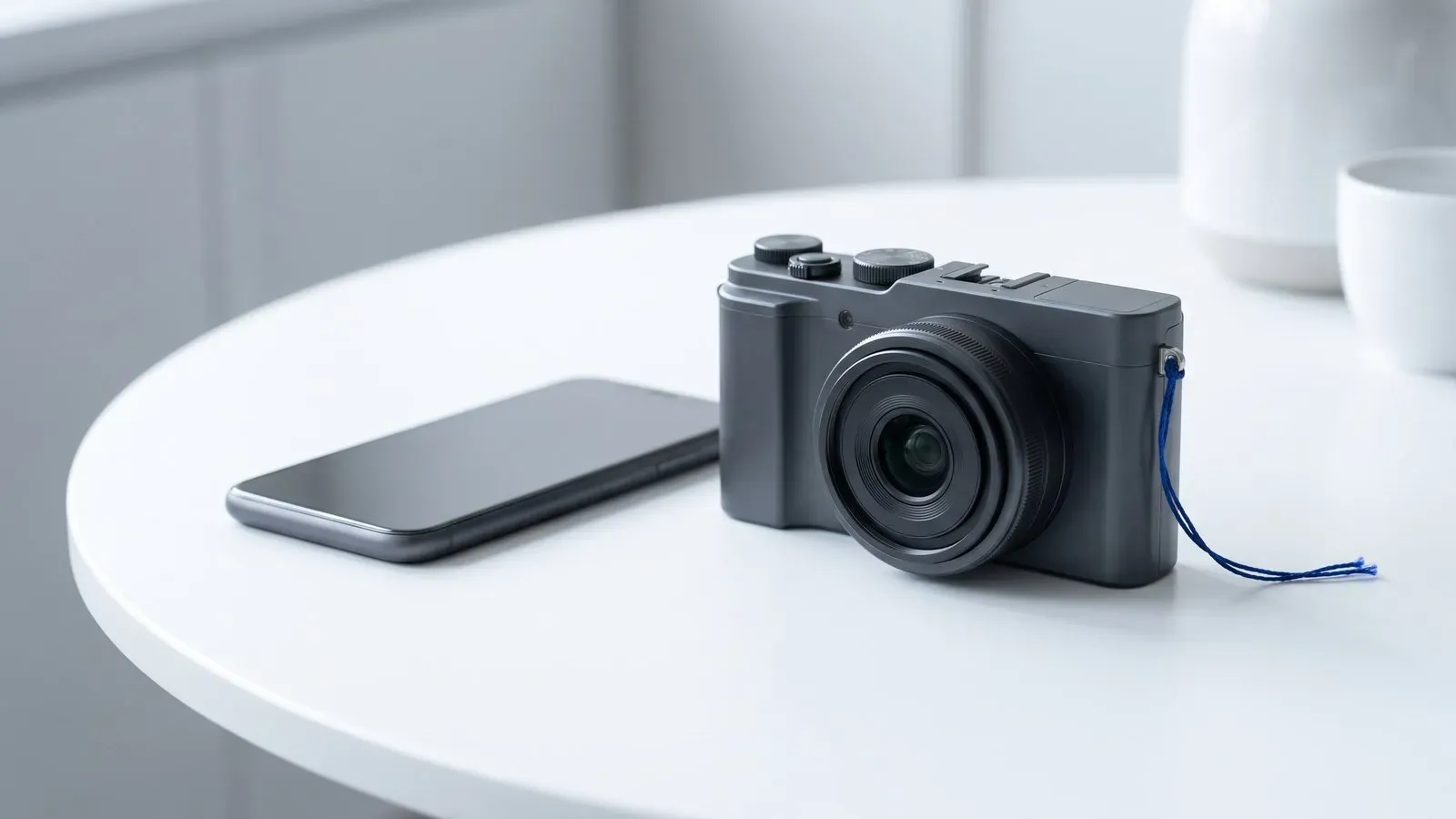
A compact with a 1in sensor is a good second camera for travel: better than a phone in low light, small enough to carry. An action camera is for water, bikes and helmets, not for portraits. An instant camera is for prints you can hold, and it is a different pleasure rather than a better photograph.
Budget for the extras. A spare battery, a memory card and a small bag add £60 to £120 to any camera. Lenses cost more than bodies over time. If that sounds unwelcome, a phone plus one good compact is the honest answer.
- Decide what your phone cannot do today.
- Try the camera in your hand before buying.
- Check the sensor size, not only the megapixels.
- Price a spare battery and a memory card.
- Look at low-light samples, not studio shots.
- Check the return window and the warranty.
A camera is a tool with a cost and a weight. Buy it when it removes a limit you can name.